Biography
Frank Nigra (1914–2002) was an American painter whose work fuses modernist structure, figurative storytelling, and lived experience. Born in Alice Castello, Piemonte, Italy, he immigrated to the United States as a child and was educated in New Jersey and New York City. He studied at the National Academy of Design, the Beaux-Arts Institute of Design, the Leonardo da Vinci Art School, and the Art Students League.
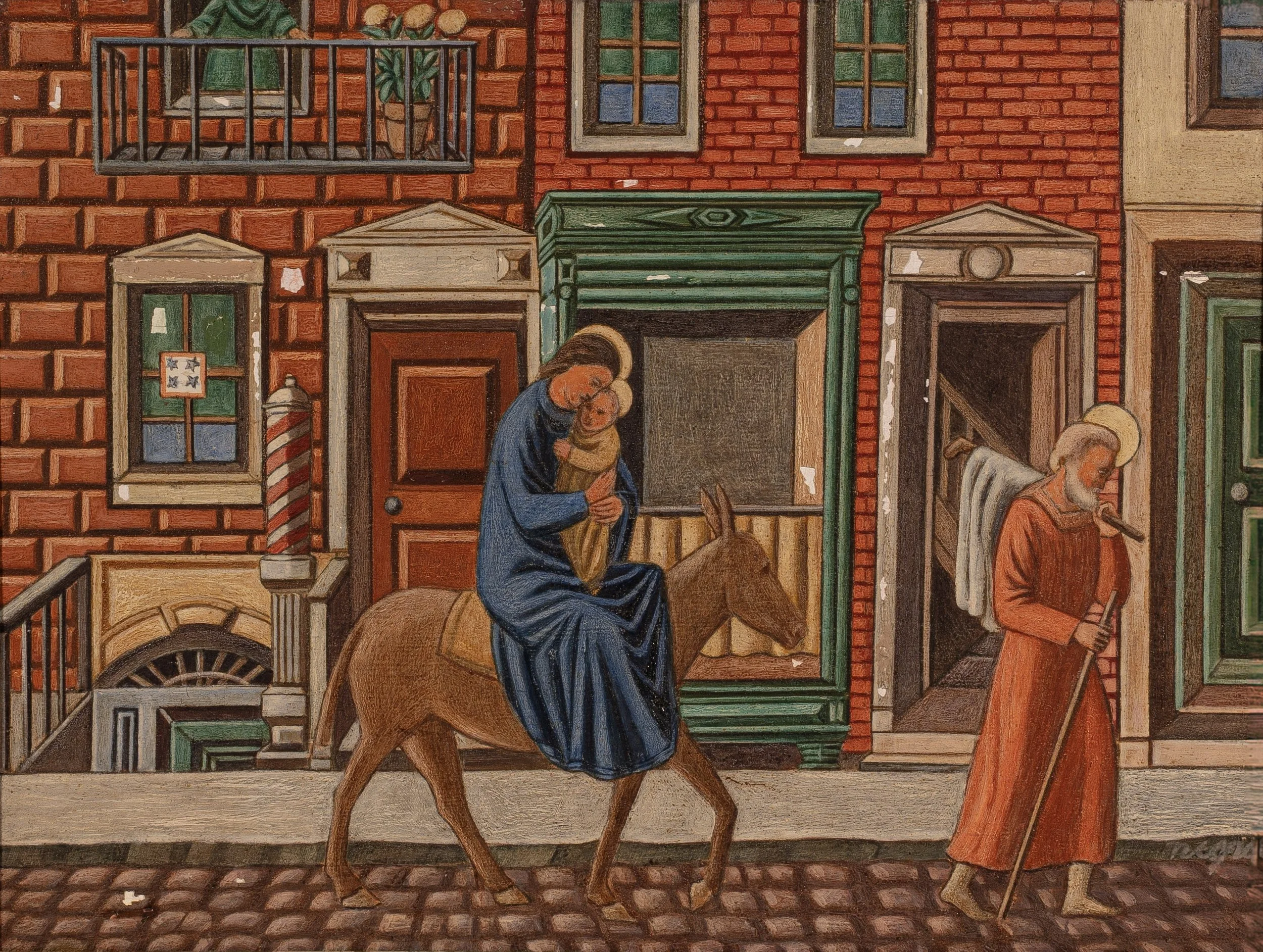
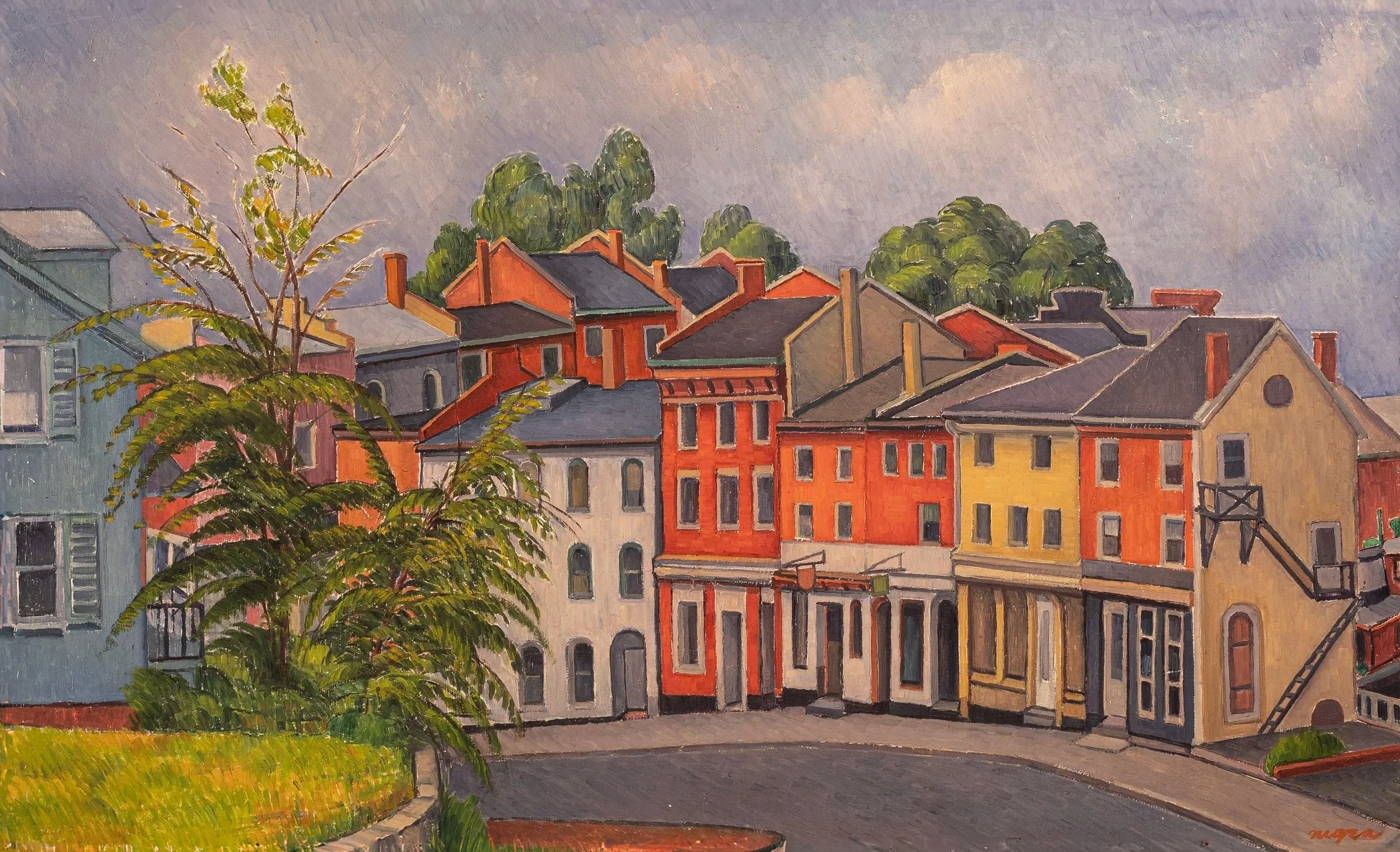
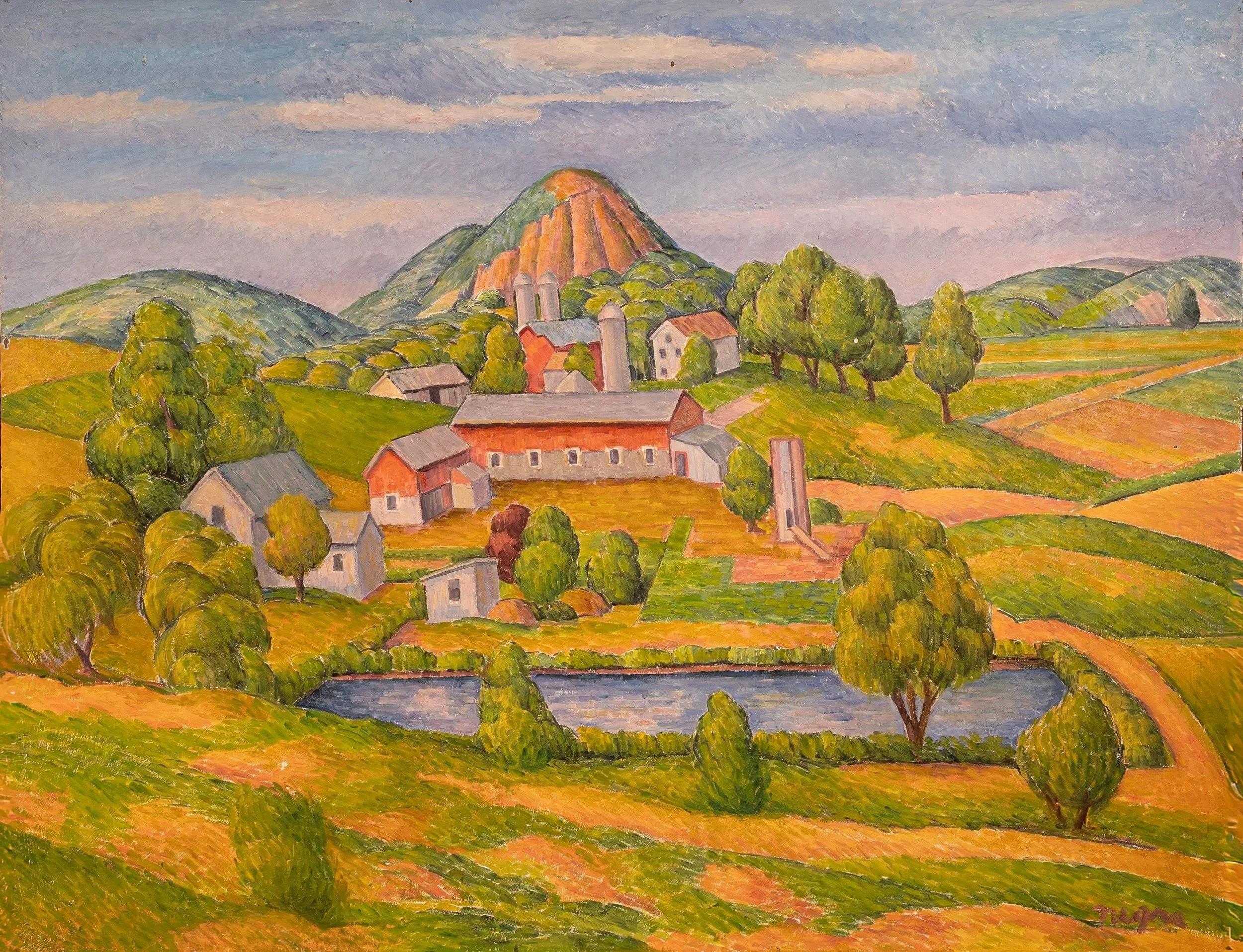
Alongside a long professional career in editorial art and design, Nigra maintained an independent painting practice for more than sixty years. He painted urban scenes, rural landscapes, domestic interiors, still lifes, and religious scenes. He often placed biblical figures within contemporary city and small-town settings. His work shows a sustained engagement with place, faith, labor, and daily life.
Nigra exhibited his paintings nationally and internationally from the 1940s through the 1990s, including participation in the International Exhibition of Religious Art in Trieste, Italy (1961), and solo exhibitions throughout New York and New England. His work appeared in publications such as Newsweek, Liturgical Arts, Mission Magazine, and Integrity Magazine.
He did not actively promote his work and remained largely outside the commercial gallery system. Even so, the scope of his paintings and exhibitions reflects a steady, lifelong practice grounded in observation, skill, and personal commitment.
This biography is based on archival materials, published sources, and family records.

Approach to Painting
Frank Nigra painted as a daily practice rather than for public recognition. He worked consistently, often alone in his home or studio, and returned to the same rooms, windows, streets, and landscapes over many years. Familiar objects and places recur throughout his work as subjects of close and sustained observation.
He was interested in structure, including the organization of color, the placement of figures within a composition, and the achievement of balance without rigidity. Religious themes appear throughout his work, with biblical figures placed in ordinary streets and rooms, presented as part of everyday life rather than set apart from it.
For Nigra, meaning was not separate from daily life, but embedded within it.